


Views: 0 Author: Site Editor Publish Time: 2026-05-20 Origin: Site


Operating complex industrial, medical, or audio equipment often requires operators to utilize both hands simultaneously. This creates an immediate need for reliable, hands-free actuation, ergonomic efficiency, and emergency control mechanisms. Foot switches directly answer this engineering demand. Specifying the wrong type of foot pedal causes major operational bottlenecks. Mismatching contact materials with electrical loads, ignoring operator fatigue, or underestimating environmental hazards results in premature mechanical failure. It also leads to strict compliance violations under OSHA, ISO, or CE standards. Poor selection introduces severe safety risks, including floor-level accidental actuation that can trigger heavy presses unexpectedly. Evaluating these switches for procurement or OEM design requires moving past basic exterior form factors. Engineers must analyze internal mechanical logic, contact plating, arc suppression capabilities, and environmental redundancies to secure the exact component for the application.
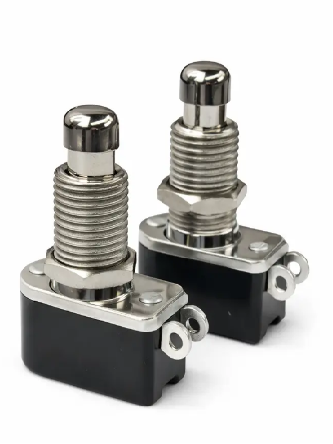
Match Mechanical Logic to Safety Needs: Selection must strictly align with operational safety; use safety anti-trip mechanisms for heavy machinery and continuous latching for prolonged tasks to reduce ergonomic fatigue.
Contact Material Dictates Electrical Lifespan: Specify gold plating for low-voltage signal applications (<0.1 Amp) to prevent resistance buildup, and silver-nickel for standard industrial loads to avoid contact burn-off.
Environmental Ratings Require Nuance: Do not conflate IP ratings with explosion-proof or NEMA hose-down ratings; high-risk environments often require mechanical redundancies like silicone splash boots alongside inherent switch seals.
Compliance is Application-Specific: Medical OEMs must adhere to IEC color-coding and ISO 13485 standards, while industrial applications prioritize UL/CUL/CE certifications, IEC 947-5-1 standards, and 50g mechanical shock resistance.
Understanding a foot switch begins with a physical teardown. Key internal components include the main pedals acting as the primary actuators. Return springs, typically manufactured from high-tensile music wire or stainless steel, ensure the pedal resets immediately after pressure removal. Skid-proof rubber bases feature high durometer ratings to prevent the entire unit from sliding across slick factory floors. Heavy-duty cast covers protect the internal mechanisms from falling debris. Internal contact blocks facilitate the actual electrical connections and isolate live voltage from the operator.
Housing duty ratings dictate structural resilience in the field. Medium-duty housings utilize lightweight, portable, high-impact polymers. They often feature carrying handles for easy transport across clinical settings or office environments. Heavy-duty housings employ rugged cast aluminum or iron. They incorporate oversized hoods designed specifically to accommodate operators wearing heavy steel-toe work boots. You must match the housing type directly to the physical hazard level of the workspace to prevent casing fractures.
Foot switches translate mechanical physical force into immediate electrical actuation. The speed of this translation determines overall circuit safety. High-quality designs integrate mechanism styles similar to Snap-acting pushbutton switches. These fast-acting internal mechanisms ensure contact velocity operates independently of the operator's foot speed. The contacts snap together instantly once a specific spring tension is reached. Immediate actuation prevents dangerous electrical arcing between the contact points.
Contrast this with slow-make or slow-break contacts. In these configurations, internal contact movement depends entirely on how fast the operator presses the pedal. Pressing too slowly generates sustained electrical arcs under heavy AC or DC loads. Engineers specify slow-make contacts only for low-risk, variable control applications where immediate current interruption is not required.
Electrical circuit logic relies heavily on NO and NC contact configurations. Normally Closed (NC) logic plays an essential role in safety-rated fail-safe loops. The circuit remains active until the operator presses the pedal to break the connection. Examples include Emergency stop (E-stop) circuits wired in series with safety monitoring relays. Pressing the pedal severs power to industrial cutters instantly. Security loops also utilize NC logic to trigger facility alarms whenever the circuit breaks unexpectedly.
Normally Open (NO) logic handles transient triggering functions. The circuit activates only when depressed. Dead-man switches rely completely on NO functionality. Equipment like industrial drills, press brakes, or welding arcs only operate while the user maintains positive foot pressure. Engineers must map these logic functions using precise P&ID (Piping and Instrumentation Diagram) symbology for OEM schematics to maintain strict facility compliance and pass safety audits.
Momentary actuation represents the standard direct-action mechanism in the industry. The electrical circuit remains active exclusively while the operator applies continuous downward pressure. Removing the foot instantly breaks the circuit and stops the machine. This format proves ideal for tasks requiring immediate cessation of mechanical movement, such as stamping presses or winding machines.
Some applications require nuanced control beyond binary on/off states. Pedal potentiometers introduce variable resistance into the control loop. They commonly utilize 5k or 10k ohm internal resistors. They dictate equipment speed based entirely on the physical degree of foot pressure applied. Operators use these variable pedals to govern sewing machines, variable-speed lathes, precision rotary tools, and TIG welding amperage outputs. Advanced models convert this resistance into a standard 4-20mA analog signal for Programmable Logic Controllers (PLCs).
Industrial production floors pose severe trip hazards. Falling tools, dropped materials, or accidental kicks can easily trigger unprotected floor pedals. Safety anti-trip mechanisms utilize a rigorous two-step mechanical safety feature. The operator must first deliberately release a mechanical latch. This usually involves kicking forward a small secondary lever hidden securely inside the hood. Only after unlocking this latch can the main pedal depress.
This neutral lock mechanism satisfies strict OSHA 1910.217 guidelines for mechanical power presses and heavy machinery environments. It heavily reduces the risk of catastrophic injury caused by falling objects accidentally triggering heavy presses. It also protects floor personnel who might stumble over floor-level controls during routine maintenance tasks.
Complex tasks demand advanced actuation logic to prevent physical strain. Low-position latching, known as maintained action, severely reduces operator fatigue. Pressing the pedal once locks the switch into the "on" state mechanically. Pressing it a second time releases the internal latch. This proves highly effective for continuous, prolonged operations where holding down a pedal manually causes severe leg and back strain over an eight-hour shift.
Two-stage dual-pressure switches operate similarly to a digital camera shutter button. A gentle half-press triggers Function A, such as laser positioning, vacuum suction, or piece clamping. Overcoming a secondary spring-resistance threshold triggers Function B, activating the primary cutting sequence or punch action. Multi-pedal arrays feature unified base stations containing up to six independent pedals. They consolidate control interfaces for complex workstations like operating theater scopes, dental chairs, or multi-axis manufacturing machines.
Electrical specification requires exact pole and throw definitions to route power safely. SPST (Single Pole Single Throw) dictates simple on/off operations, controlling one single circuit path. SPDT (Single Pole Double Throw) provides basic alternating control, switching power between two different outputs based on the pedal's resting or depressed position.
DPDT (Double Pole Double Throw) usage isolates two completely separate circuits simultaneously. Actuating the pedal controls both circuits at once without mixing their voltages. Engineers must differentiate between shorting (make-before-break) and non-shorting (break-before-make) contact styles to prevent brief electrical signal crossovers during the mechanical transition.
Configuration | Switching Action | Primary Application Use Case |
SPST | On / Off (Single Circuit) | Basic power delivery to a single motor or light |
SPDT | Toggle Between Two Circuits | Routing a signal to an active process vs a standby indicator |
DPDT | Controls Two Isolated Circuits | Triggering a high-voltage motor while simultaneously sending a low-voltage PLC signal |
Dual DPDT | Controls Four Isolated Circuits | Complex multi-axis machine orchestration from one pedal press |
Controlling heavy inductive loads requires superior arc suppression technology. Double-Break Form Z contacts address this exact electrical physics challenge. They provide two distinct breaking points per individual circuit path. When the circuit opens, the design rapidly extinguishes electrical arcs by splitting the physical gap distance in half.
This dual-gap approach proves mandatory when controlling highly inductive loads or large DC motors. Splitting the arc heavily reduces internal thermal damage and prevents the contacts from micro-welding together. This mechanism significantly extends the switch's electrical lifespan, allowing components to reliably reach the 5-million-cycle operational benchmark without failure.
The metal plating on internal electrical contacts determines component longevity and signal clarity. Silver-nickel serves as the baseline industrial standard for switching. It handles high-current voltage surges and inrush currents exceptionally well without degrading. It provides robust durability for standard machinery switching running 10 to 15 Amps.
Gold plating operates under entirely different engineering constraints. Engineers reserve gold strictly for micro-loads and low-voltage logic circuits operating under 0.1 Amps (100mA). Gold prevents surface oxidation, ensuring reliable data transmission to sensitive PLCs and microcontrollers. Never specify gold in high-current industrial applications. Heavy current will instantly burn off the delicate gold flashing, exposing the base metal and causing immediate component failure.
Environmental defense relies on standardized ingress protection requirements based on the installation zone. General industrial environments usually demand IP65 ratings to protect against ambient dust and low-pressure water jets. Continuous immersion scenarios require integrating fully waterproof Pushbutton switches(IP67) directly into the sealed pedal assembly to prevent internal short circuits.
Engineers must cross-reference IP ratings with North American NEMA standards during procurement. NEMA Type 1 offers only basic indoor protection against solid objects and falling dirt. NEMA Type 4 or 13 ratings are expressly required for heavy industrial hose-down procedures or heavily oiled CNC machine environments where coolants flood the floo
| Protection Standard | Application Environment | Denfensive Characteristics |
IP65 | General Industrial | Dust-tight structure, resists low-pressure water jets from any angle |
IP67 | Wet Processing Zones | Withstands temporary full water immersion up to 1 meter depth |
NEMA Type 1 | Indoor Commercial | Protects against basic solid ingress and incidental personnel contact |
NEMA Type 4X/13 | Heavy Washdown | Resists cutting oil, coolant, high-pressure hose-downs, and corrosion |
Industrial specifications clearly distinguish between weather-resistant, waterproof, and intrinsically safe explosion-proof designs. Explosive Class I Division 1 environments cannot tolerate even minor electrical sparks. Electro-pneumatic isolation solves this ignition hazard entirely. The floor pedal contains absolutely no electrical parts or wiring.
Instead, pressing the pedal compresses an internal bellows, forcing a burst of air through a pneumatic tube. This air pulse travels safely out of the hazard zone and triggers a remote electrical pressure switch located in a secure panel. This physical isolation proves mandatory for volatile chemical laboratories, wet medical zones, and explosive dust environments found in mining or grain processing facilities.
Robust OEM physical testing ensures long-term operational safety in punishing environments. Quality manufacturers subject their switches to 30-million-cycle mechanical lifetime endurance tests. Units undergo severe drop testing onto concrete and 50g mechanical shock tests. These thresholds guarantee that physical impacts do not accidentally shift internal contact positions or shatter polymer housings.
Facility managers should deploy specific field redundancies for outdoor installations. Adding external silicone splash boots over the entire pedal assembly provides excellent secondary defense. These boots prevent heavy particulate jamming, mud ingress, and ice buildup in harsh outdoor lumber yards or extremely dirty machine-shop environments.
Proper procurement demands assessing terminal integration options based on installation requirements. Screw terminals allow for easy field wiring and rapid modular repairs using basic hand tools. Solder terminals provide permanent, vibration-proof connections for high-shock environments. You can also source Pushbutton switches with wire leads pre-potted directly into the housing with industrial epoxy. These offer superior moisture resistance, though bare leads always require strict grounding protocols to the main equipment chassis.
Audio plugs, specifically 1/4" phone jacks, dominate low-voltage continuous use applications. You will find these connectors extensively in tattoo machine power supplies, precision TIG welder amperage controls, or consumer musical instruments where rapid disconnection is expected.
Connecting a foot switch directly to high-voltage motors presents a massive thermal hazard. The safe logic requires integrating the foot switch with a Miniature Circuit Breaker (MCB) and an industrial Contactor relay.
Disconnect all facility power to the machine panel and verify zero voltage using a multimeter.
Connect the low-voltage MCB phase wire to the foot switch's Common (COM) terminal.
Route a return wire from the switch's Normally Open (NO) terminal directly to the Contactor's electromagnetic coil input (A1).
Connect the Contactor's coil ground (A2) to the panel's neutral bus bar.
Wire the high-voltage motor supply strictly through the Contactor's primary load terminals (L1/L2/L3 to T1/T2/T3).
When the operator presses the pedal, the low voltage activates the Contactor coil. The Contactor then safely pulls in the high-voltage industrial load. This configuration ensures absolute safe physical separation between the low-voltage floor pedal and the high-voltage machinery.
Retrofitting existing 120V machinery with dead-man control often disrupts operations and requires expensive electrician hours. Piggyback plugs, also known as series tap plugs, provide an immediate "plug-and-play" solution. This setup targets North American NEMA 5-15P setups running standard 10-15 Amp resistive loads.
The operator inserts the special foot switch plug directly into the wall outlet. They then plug the machinery's power cord directly into the back of the foot switch plug. This series connection instantly enables rapid pedal control. It completely bypasses the need for custom manual electrical wiring or factory downtime.
Advanced machinery integrates floor controls directly into the central PLC architecture via terminal blocks. Foot switches wire in series with main control panels. They function in tandem with overhead safety interlocks, light curtains, and gate sensors to verify secure operating conditions before initiating movement.
Control board designers often install sub-miniature Pushbutton switches on the main operator console. These illuminated buttons provide immediate visual status feedback, glowing brightly to indicate the foot pedal's current actuation state. This ensures floor operators and panel supervisors remain perfectly synchronized during complex automated manufacturing sequences.
Heavy manufacturing demands brutal mechanical resilience from every floor-level component. Plastic components shatter rapidly under these punishing conditions. Requirements mandate heavy cast metal enclosures that resist extreme crushing force from forklifts or dropped steel stock. Oversized metal hoods prove necessary to easily accommodate standard steel-toe work boots. Safety anti-trip latches act as non-negotiable features under modern safety mandates. These units must sustain high mechanical shock resistance up to 50g without exhibiting contact bounce or false triggering.
Medical OEMs navigate highly restrictive regulatory environments when designing surgical equipment. Clinical switches mandate full ISO 13485 compliance and adherence to IEC 60601-1 electrical safety standards. Designs require smooth, hygienic, and easy-to-clean profiles that prevent bacterial cross-contamination in sterile operating fields.
IEC Color Coding standards strictly govern medical device pedal layouts to eliminate user error. International standards designate yellow pedals explicitly for activating "Cutting" tools. Blue pedals universally trigger "Coagulation" functions. To prevent critical trip hazards during high-stress surgery, premium hospital setups utilize wireless RF signals or USB programmable foot switches. These battery-powered units assist heavily in radiology image capture and fluoroscopy without tethering operators to heavy consoles.
Audio equipment relies on specialized switching mechanics to preserve pristine analog signal purity. Guitar effects pedals utilize a specific 3PDT (Three Pole Double Throw) switch architecture. This layout handles "true bypass" signal routing effectively. It allows audio waveforms to bypass the internal circuitry completely when the effect is turned off, maintaining absolute signal integrity from the instrument to the amplifier.
Electronic instruments utilize specialized continuous momentary pedals with internal potentiometers. Musicians rely on these variable inputs as sustain switches for electric pianos and digital synthesizers. The pedals map physical downward pressure to specific MIDI control parameters, allowing for highly expressive musical performances.
Implement the following procedures to finalize your procurement strategy and verify system compatibility:
Review your facility P&ID schematics to firmly confirm NO and NC logic requirements for your safety relays.
Audit the specific installation environment for required high-pressure hose-down, explosive dust presence, or medical sterilization standards.
Cross-reference the expected load current with the planned contact plating materials, ensuring gold is strictly limited to low-voltage PLC signals.
Consult with your selected switch manufacturers on exact cycle-life test data and 50g shock ratings before authorizing bulk specification.
A: Snap-action contacts actuate instantly once a specific force threshold is reached, regardless of how fast the operator presses the pedal. This prevents arcing. Slow-make contacts move proportionately to the operator's foot speed, which can cause severe arcing and thermal damage if pressed too slowly while controlling heavy electrical loads.
A: Gold-plated contacts should only be used in very low-current, low-voltage environments. This typically means applications drawing less than 0.1 Amps. Gold prevents oxidation and ensures reliable signal transmission. Using gold contacts in high-current scenarios will instantly burn off the plating and destroy the switch.
A: It is a safety-mechanized switch featuring a secondary mechanical latch. This latch must be deliberately bypassed, usually by sliding a lever with the toe. Only then can the main pedal be depressed. This prevents accidental activation from dropped tools or stumbling personnel near the floor.
A: Yes. By utilizing a DPDT (Double Pole Double Throw) or Dual DPDT internal configuration, a single foot pedal action can simultaneously open one circuit and close another. Advanced Dual DPDT layouts can control up to four completely independent electrical paths simultaneously without mixing voltages.
A: The pedal itself contains absolutely no conductive materials or wiring. Pressing it merely pushes a pulse of air through a flexible hose. This air triggers a remotely located electrical pressure switch. This ensures 100% electrical isolation in wet, explosive, or highly volatile laboratory environments.
A: International IEC standards dictate specific colors for medical tool actuation to strictly prevent surgical errors. For example, yellow pedals universally activate cutting functions on surgical tools. Conversely, blue pedals exclusively activate electrical coagulation features during procedures to prevent accidental tissue damage.
