Language


Toggle switches are widely used in radio-controlled (RC) aircraft transmitters and ground control stations (GCS). In an RC transmitter, they provide physical inputs for flight mode selection, motor arming and disarming, retractable landing gear, stabilization, and trainer functions.
A ground control station is an operator platform for monitoring and commanding unmanned systems, including unmanned aerial vehicles (UAVs), unmanned ground vehicles (UGVs), and robotic platforms. Toggle switches on a GCS control panel can support operating mode selection and auxiliary commands, depending on the system design.
When selecting toggle switches for RC transmitters or UAV ground control stations, evaluate signal compatibility, switch action, lever design, contact reliability, and panel requirements. Clear switch positions and tactile feedback help operators identify controls while keeping their attention on the aircraft, vehicle, or monitoring display.
The following five steps explain these selection criteria for transmitter and control panel designs.
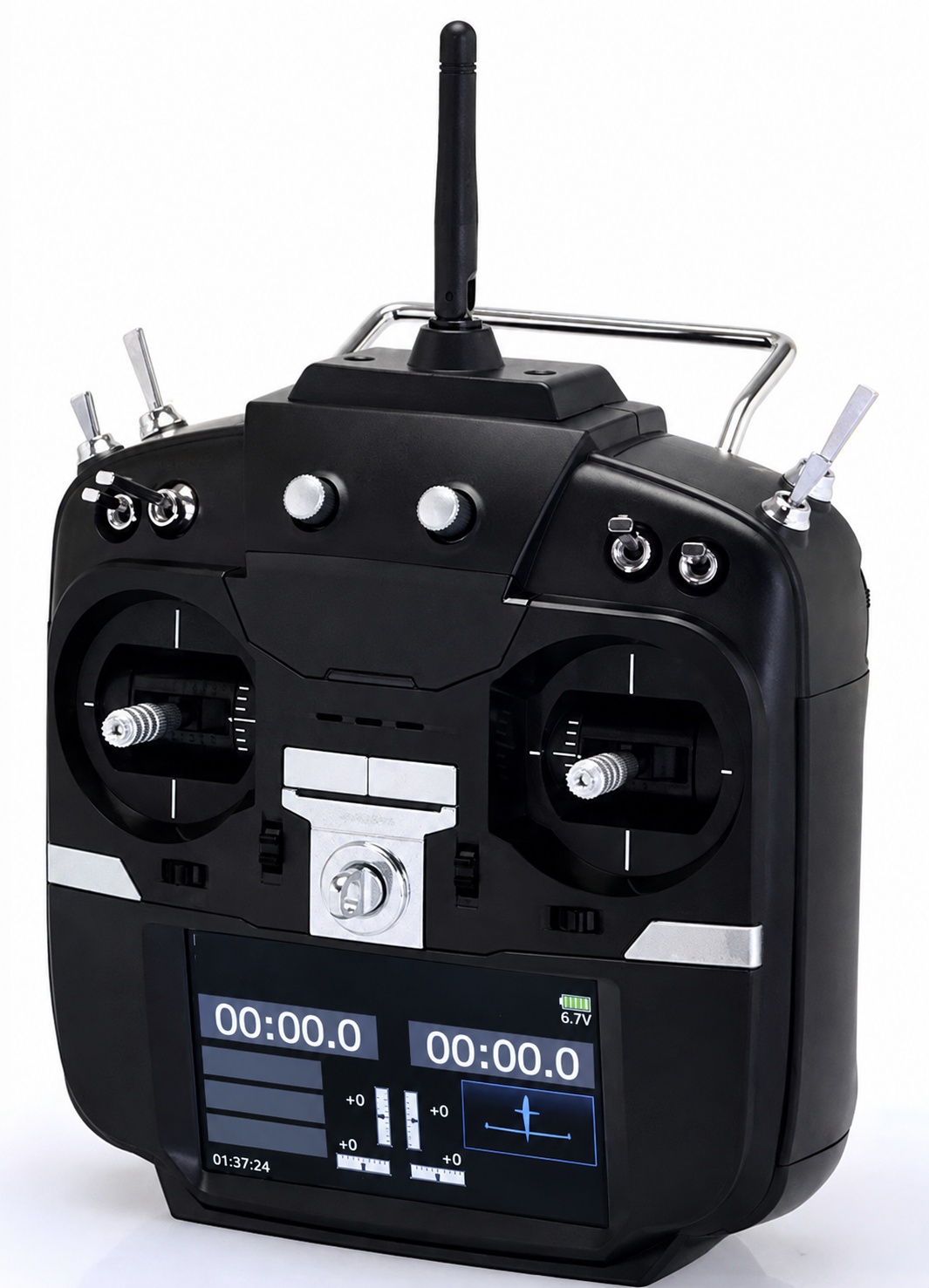
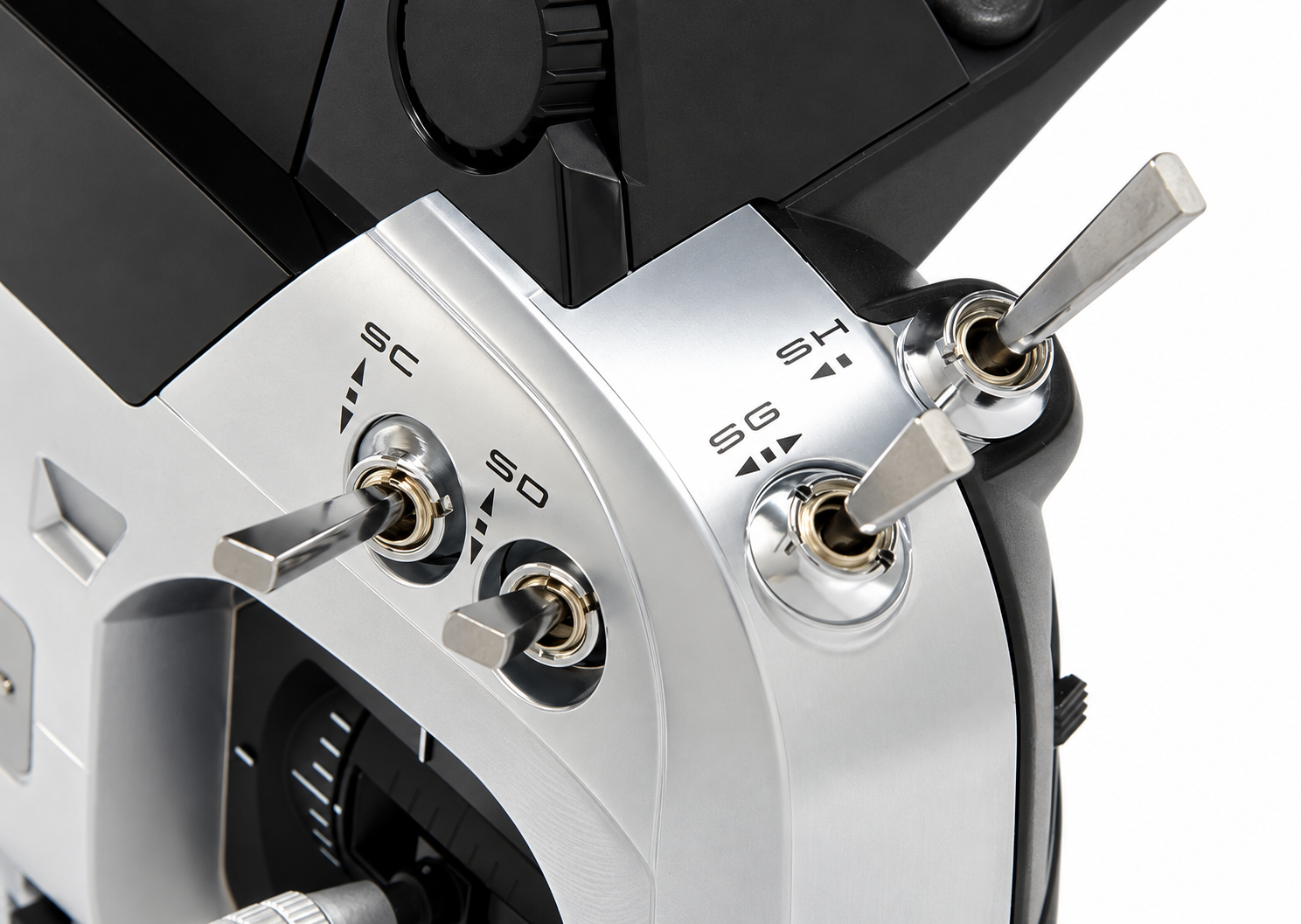
PIC I: RC aircraft transmitters PIC Ⅱ : toggle switches for RC transmitters
RC transmitter switch inputs typically operate at low voltage and low current. In these circuits, the switch sends a control input to the transmitter electronics rather than carrying the aircraft motor current. Check the actual input circuit in a GCS as well, because signal and load requirements vary by controller.
Check the actual switching voltage, current, contact arrangement, and minimum applicable load. A high current rating alone does not establish suitability for low-level signals. TACLEX can help match the switch configuration and contact material to the circuit requirements.
A maintained toggle switch stays in the selected position; a momentary toggle switch returns when released. Choose a 2-position or 3-position toggle switch according to the number of inputs the controller must distinguish. The examples below depend on the input circuit and firmware configuration.
RC transmitter function | Switch action to consider |
Motor arming/disarming, throttle cut, aircraft lighting, landing gear, or stabilization on/off | |
Flight mode selection, preset gyro gain, or pitch-curve selection | 3-position maintained: ON-OFF-ON |
Temporary trainer control or a command triggered in one direction | One momentary side: ON-OFF-(ON), where a maintained opposite position is also required |
Return-to-home, an aerobatic command, an alarm, or another brief command when configured for momentary input | Momentary on both sides: (ON)-OFF-(ON), when two separate commands are needed |
Functions requiring added resistance to accidental operation | 2- or 3-position locking toggle with a pull-to-unlock lever, subject to the selected configuration |
*()=MOMENTARY, the lever returns to the center position upon release.
During flight, pilots often find and operate switches by touch. Different lever shapes, lengths, and locations can help distinguish adjacent controls, while clear detents make the selected position easier to recognize. For a GCS control panel, also evaluate reach and spacing with the gloves used by the intended operators.
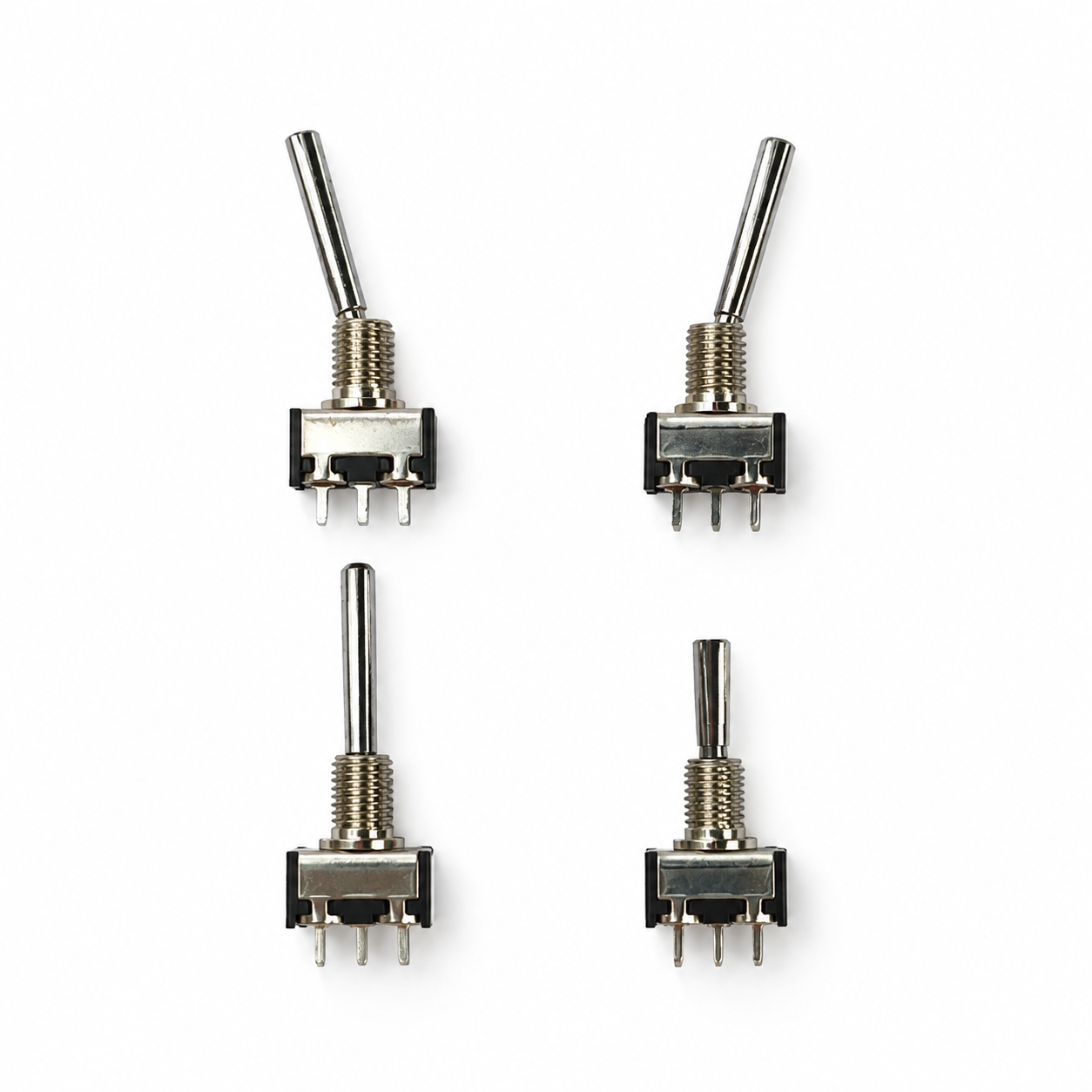
PIC: Different Toggle lever shapes
Lever option | Selection considerations |
Flat lever | Provides a broad finger contact surface and a distinct shape that can help users identify the control by touch. |
Round lever | Offers a slim profile; the perceived operating feel depends on lever length and the internal switch mechanism. |
Short flat lever | Reduces protrusion and may reduce accidental contact or damage during handling and storage. Check fingertip access. |
Long flat lever | Provides more leverage and greater tip travel for the same switching angle. Check spacing and accidental-contact risk. |
Long round lever | Combines a slim profile with extended reach for layouts or transmitter modifications that require a longer lever. |
TACLEX offers flat-lever options in the 1M, 1F, and FD series, with custom lever dimensions available for project-specific requirements. Confirm the available combinations for the selected series.
Taclex can provide operating force data for each switch position to support initial selection, but the final feel also depends on panel layout, switch spacing, and mounting height. Evaluate samples in the assembled transmitter to confirm reach, detent feedback, and operating comfort.